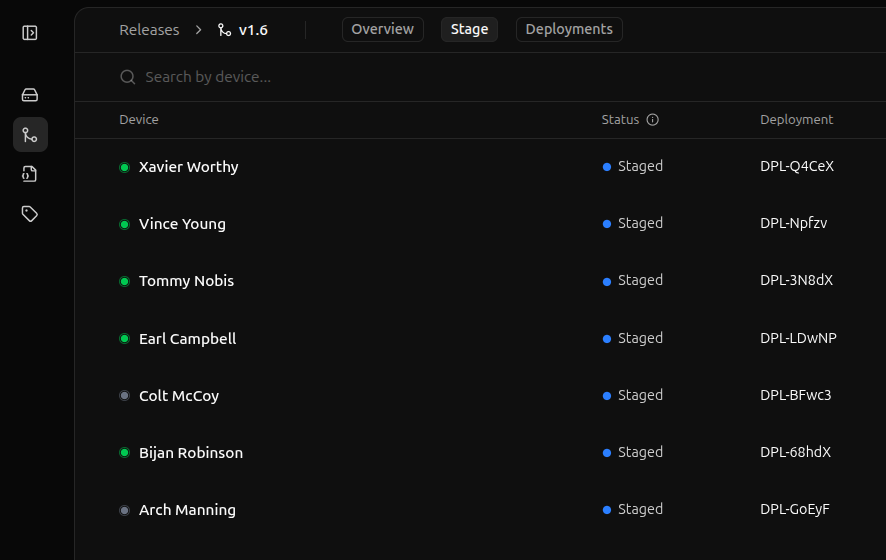
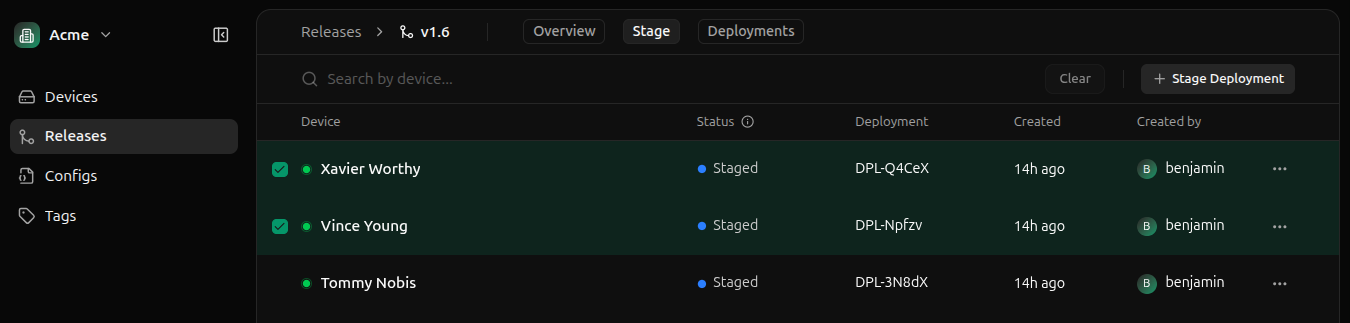
The staging area for a release is where deployments are created in preparation for a future rollout. The staging area only contains staged deployments. Currently deployed and previously deployed deployments are not accessible in the staging area.Deployments in the staging area can be created freely before being deployed to devices, making it an ideal place to prepare and review them before rolling them out.Each release has its own staging area, entirely separate from other releases’ staging areas. This separation allows deployments to be staged for multiple releases simultaneously.The staging area is also handy for batch operations. Deployments can be created, deployed, and archived in bulk, which helps manage large numbers of deployments at once.
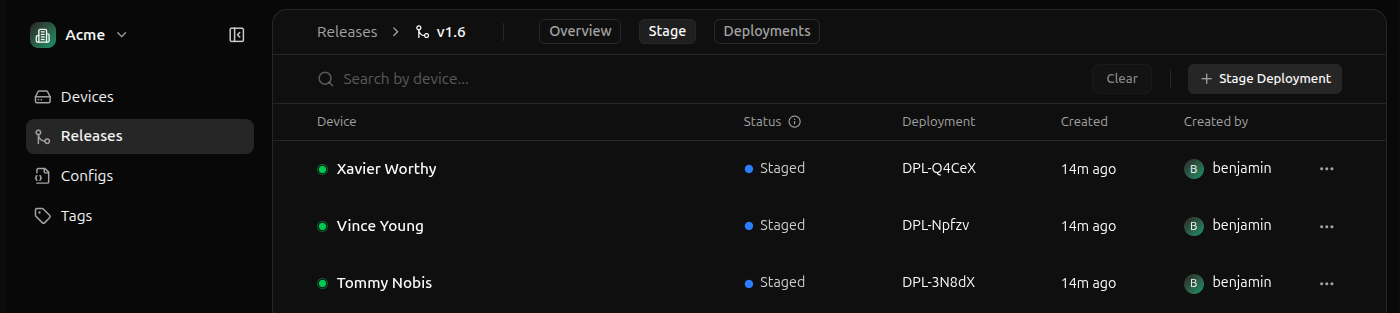
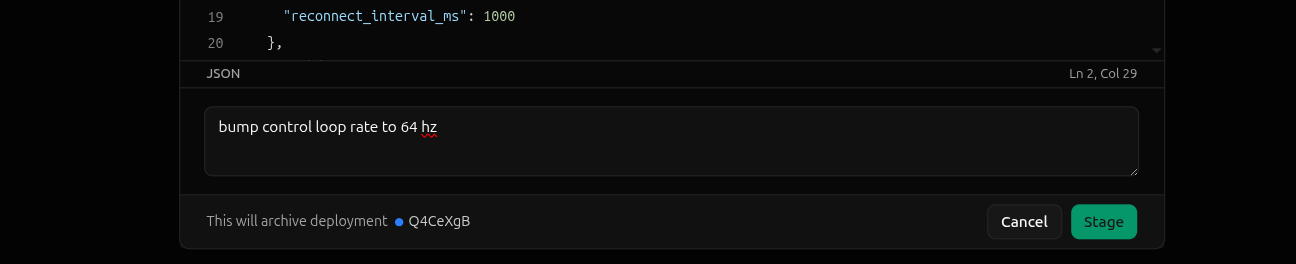
Staging a deployment creates a new deployment in the staging area but does not deploy it to any devices.Only one deployment can be staged per device at a time. If a release already has a deployment staged for a device, staging a new deployment will replace the existing deployment.To stage a deployment, click the Stage Deployment button in the top right.
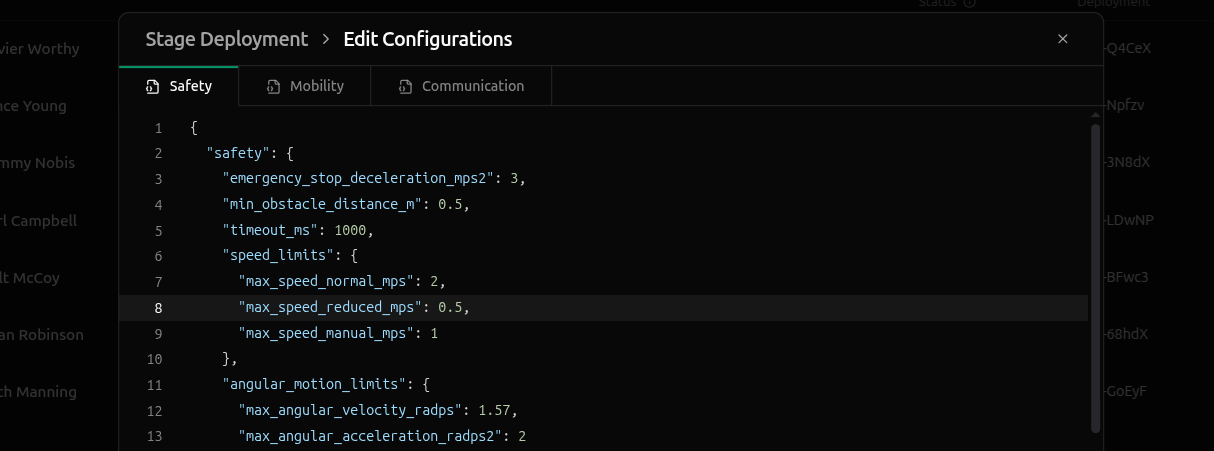
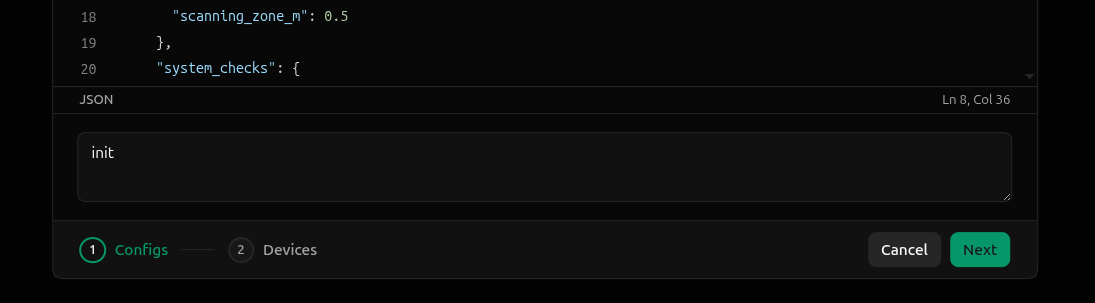
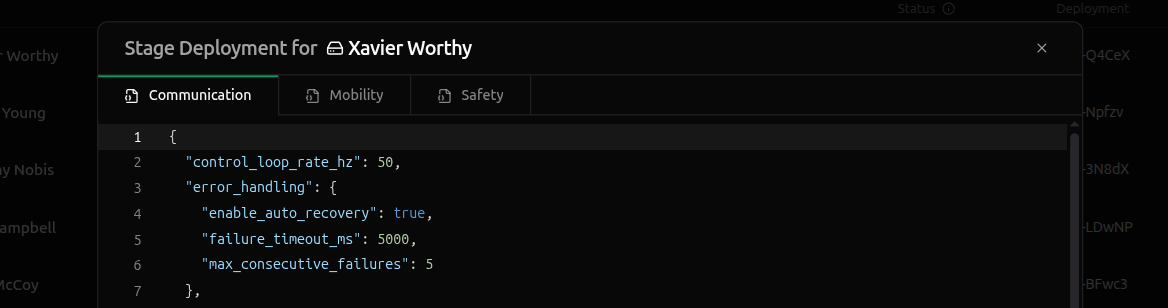
A dialog will appear with tabs for each config schema defined in the release. The tabs are pre-populated with the schema’s default values.Make any desired edits to the config instances, enter a description at the bottom of the dialog, and hit Next.
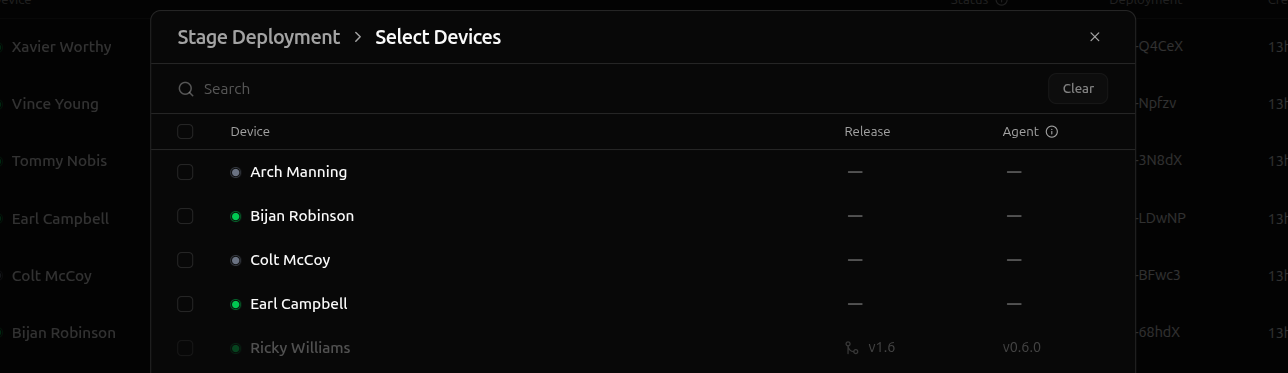
Select one or more devices to stage this deployment for. Selecting multiple devices creates a separate deployment for each device.
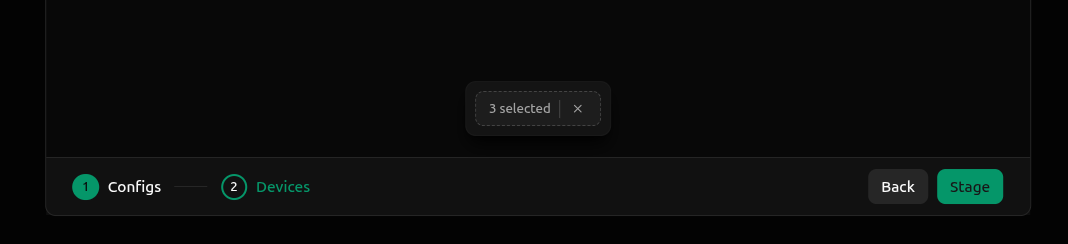
You may find some devices unavailable for selection—these devices have configurations for this release that are already deployed. This is not allowed.You can only stage deployments for devices that are running a different release. To patch configurations for such devices, make your edits in the device’s config editor.Once satisfied with the selected devices, click Stage at the bottom of the dialog.
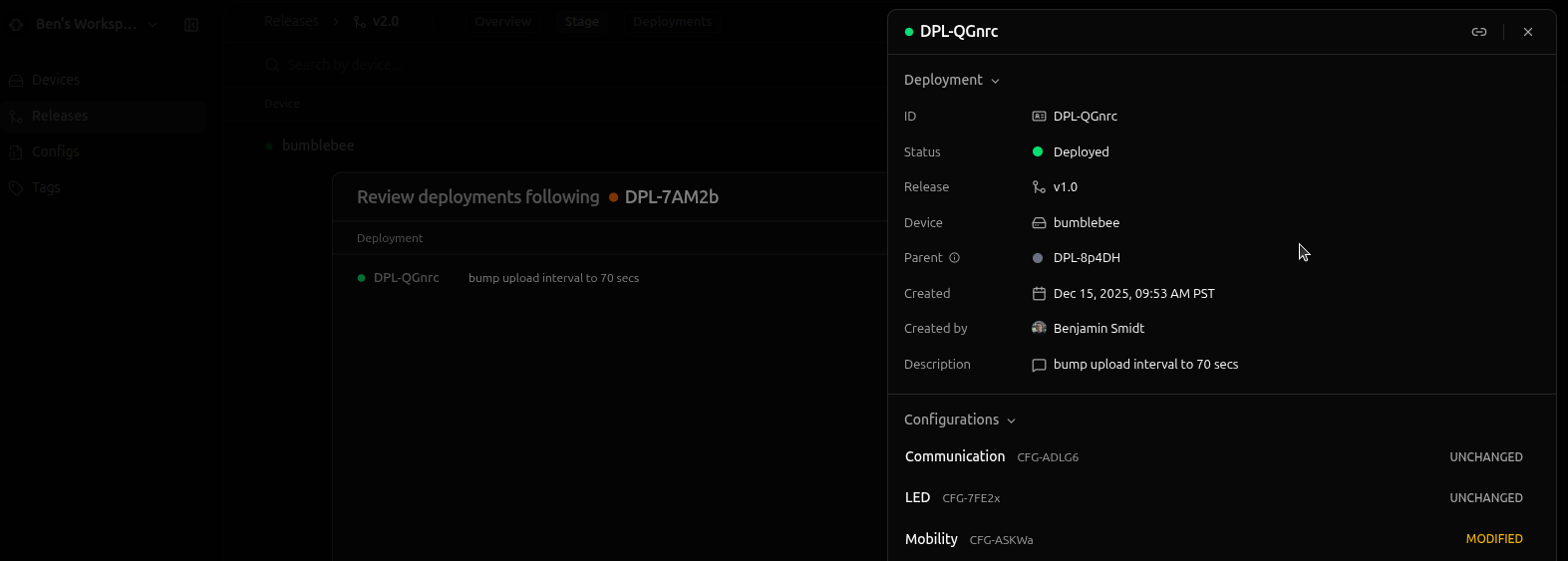
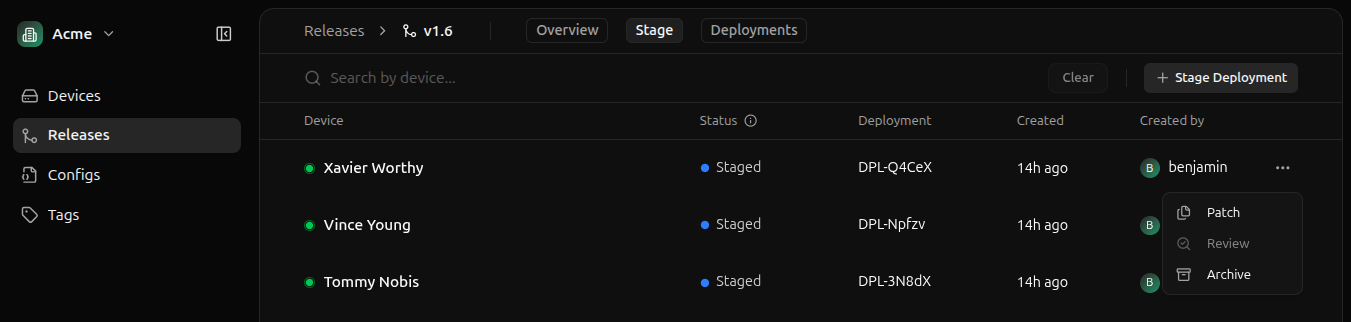
To view a deployment in the staging area, select it from the list.A panel will open on the right of the page displaying the deployment’s details.
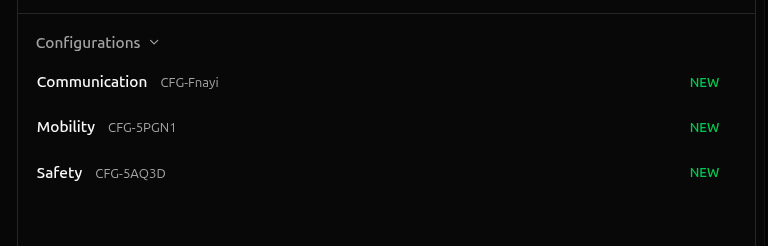
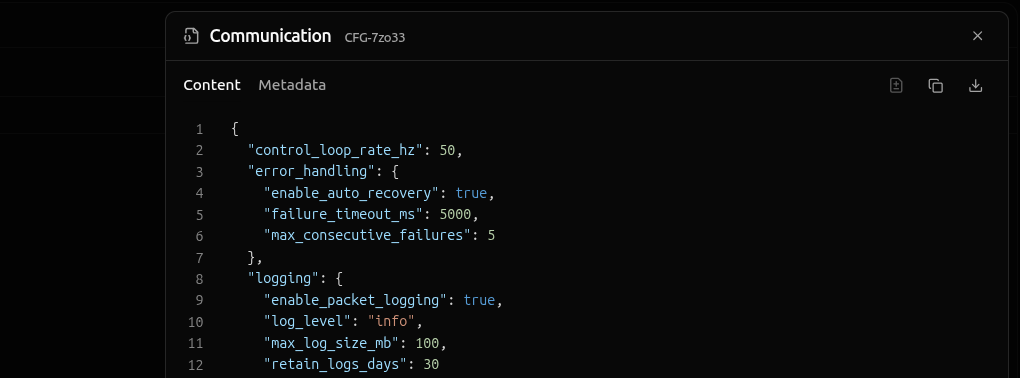
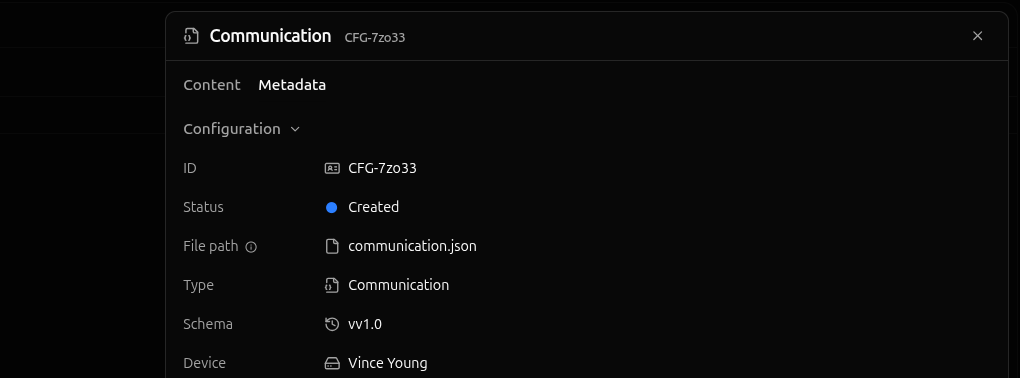
To view the details of any config instances in the deployment, click into the config instance in the Configurations section of the panel.
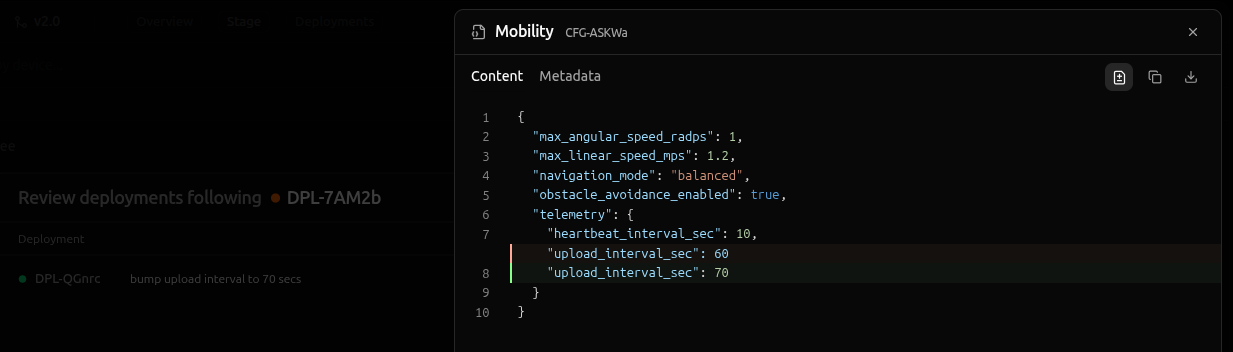
The content tab contains the config instance’s parameters, while the metadata tab contains audit information—the author, creation date, description, etc.
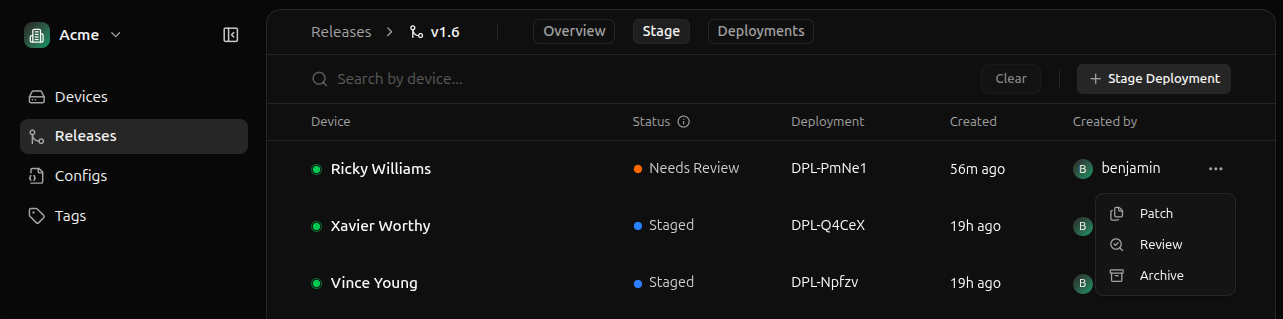
Patching a deployment is the process of creating a new deployment to replace an existing one. Patching explicitly marks the original deployment as the parent of the latest deployment, making it easy to trace the history of changes for a device’s configurations.When patching a deployment, the original deployment is archived and removed from the staging area, with the new deployment taking its place.To patch a deployment, click the ellipses (…) on the deployment to patch and select Patch from the dropdown.
A dialog will appear with the original deployment’s config instances populated in each tab.
Make any desired edits to the config instances. Once satisfied with the edits, enter a description at the bottom of the dialog and hit Stage.
Archiving a deployment removes it from the staging area and marks it as archived.This action is irreversible. Once archived, a deployment can never be deployed to a device. However, the deployment will remain available for historical reference.Single DeploymentTo archive a single deployment, click the ellipsis (…) on the deployment and select Archive from the dropdown.
A confirmation dialog will appear—hit Archive to confirm.
Multiple DeploymentsTo archive multiple deployments, hover over the deployments you want to archive and select the checkbox in the far-left column.
At the bottom of the page, click Archive from the available bulk actions.
A confirmation dialog will appear—hit Archive to confirm.
Deploying a deployment removes the existing deployment from the device and replaces it with the new deployment.This action is irreversible. Once deployed, the only way to restore configurations is to create a new deployment with the old configurations.To deploy one or more deployments, hover over the deployments you want to deploy and select their checkboxes in the far-left column.
At the bottom of the page, click Deploy from the available bulk actions.
A confirmation dialog will appear. Hit Deploy to confirm.
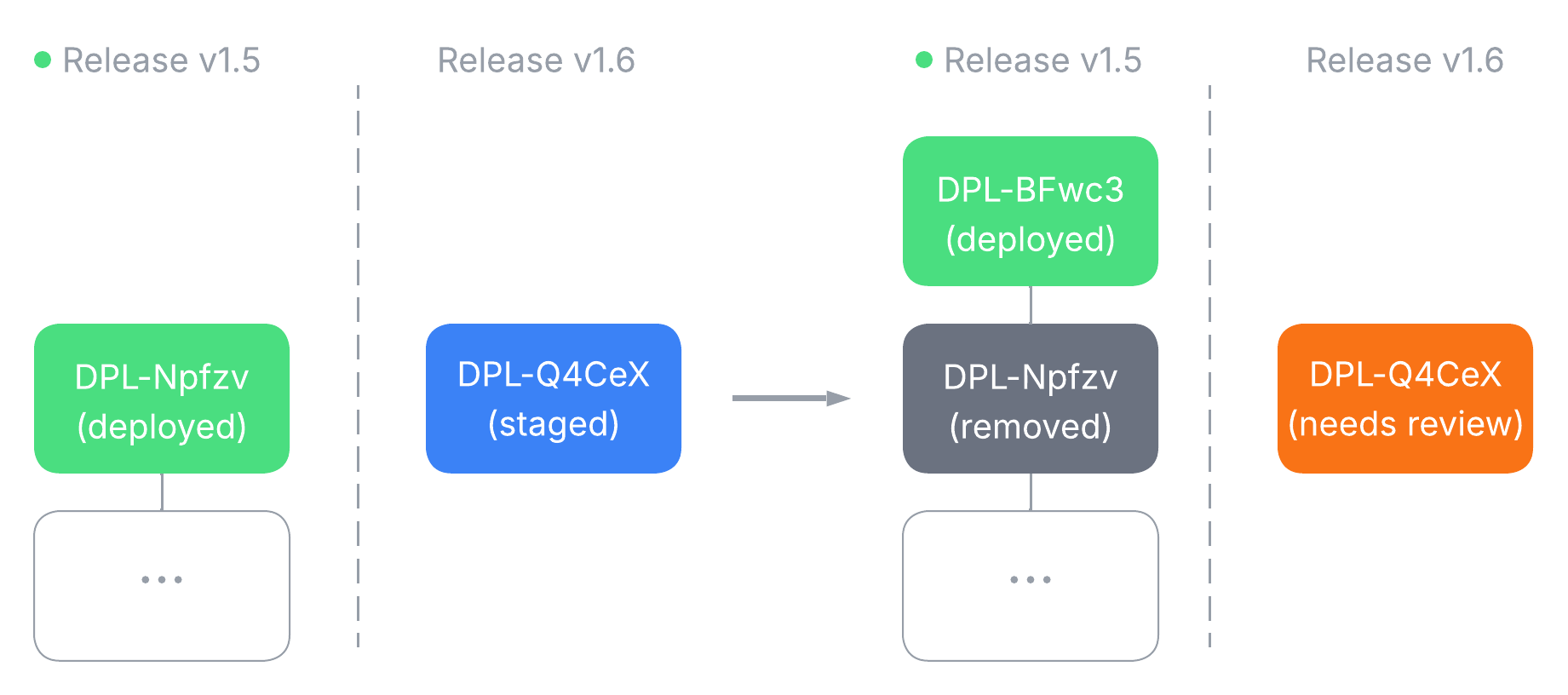
When a device receives configuration updates for its current release while having deployments staged for another release, we say the staged deployment has drifted.Consider the following example:Our device is currently running deployment DPL-Npfzv, which adheres to release v1.5. Our device is about to be upgraded to release v1.6 though, so we’ve staged deployment DPL-Q4CeX for the upcoming upgrade.However, before the upgrade occurs, our device receives some configuration updates on release v1.5—DPL-Npfzv is patched with DPL-BFwc3. Since it’s often the case that this patch also needs to be applied to the staged deployment DPL-Q4CeX, we say DPL-Q4CeX has drifted.When a deployment drifts, it is marked as needs review and cannot be deployed until an explicit review is performed. You must either ignore the patch or apply the patch to the staged deployment.The concept of deployment drift ensures that configuration changes aren’t lost during migrations between releases, preventing misconfigurations.
Reviewing a deployment is only possible when a deployment has drifted and is in the needs review state. Otherwise, the review button is disabled.Reviewing a deployment displays the patches applied to a device since the last time the deployment was reviewed (or since it was initially staged).To review a deployment, click the ellipsis (…) on the deployment and select Review from the dropdown.
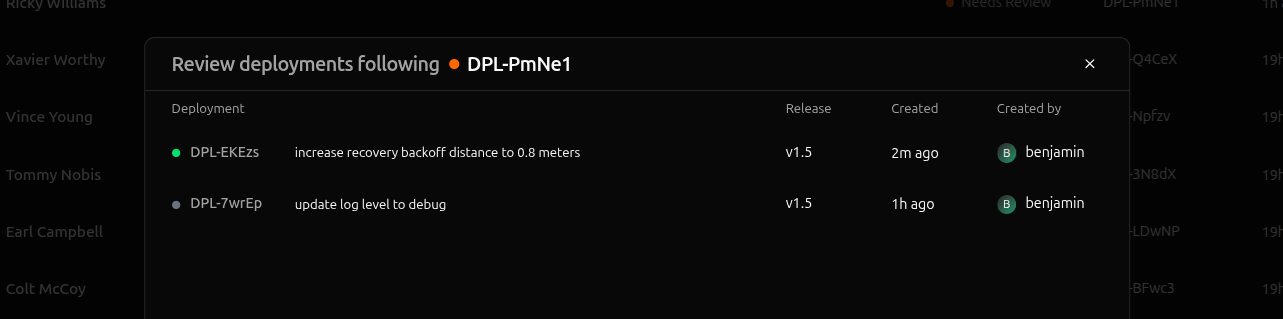
A dialog will appear with a list of deployments that have been patched to the device since the last time the deployment was reviewed (or when it was initially staged).
Clicking a deployment opens the deployment details panel on the right side of the page.
Clicking a deployment’s listed configuration opens that config instance’s details panel, with the differences highlighted.
With the deployment’s patches available for review, you have two options for proceeding.RestageThe first option is to restage the deployment as-is, effectively ignoring the patches that have occurred. This will move the deployment to the staged state and allow it to be deployed.
ArchiveThe second option is to archive the deployment. This removes the deployment from the staging area and moves it to the archived state. Archived deployments are available for historical reference but cannot be deployed.
PatchThe ability to apply patches to a drifted deployment is currently unavailable, but will be coming soon!







 Our device is currently running deployment